

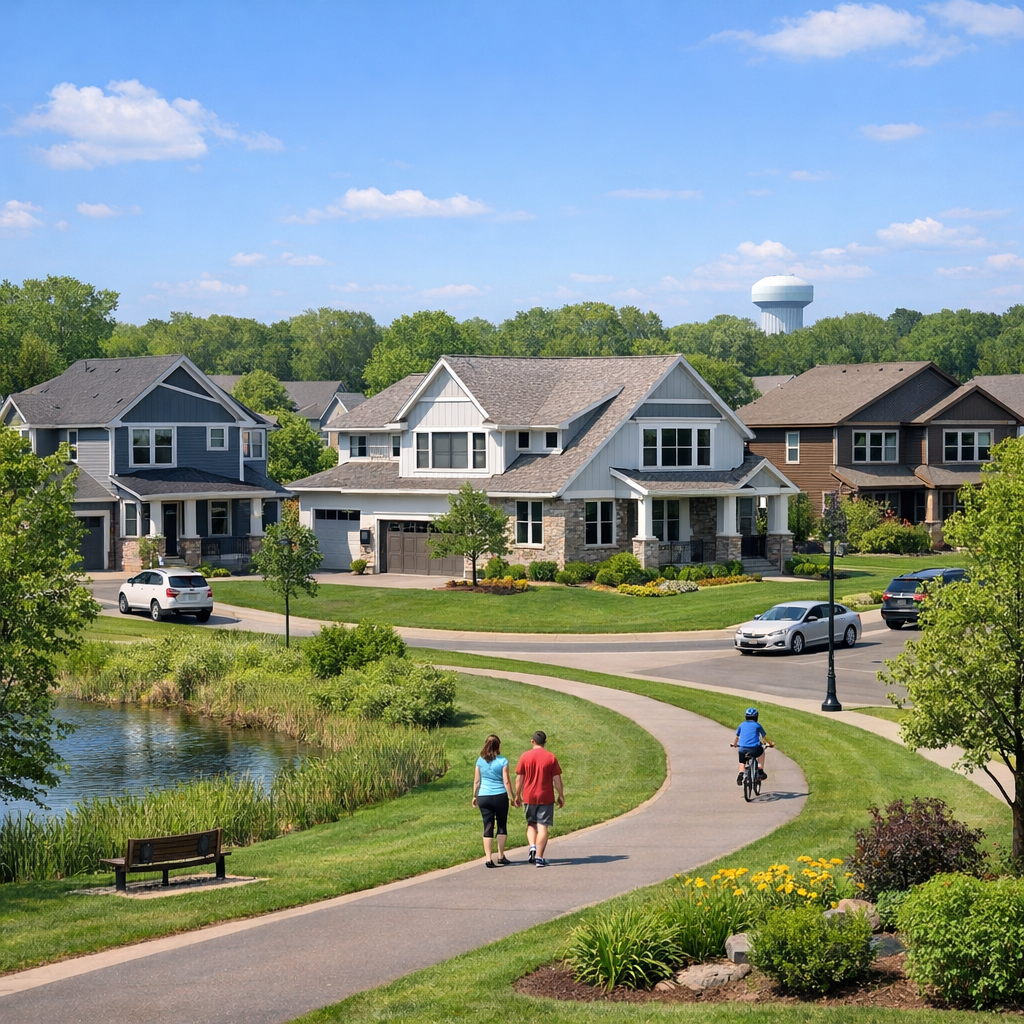
Eagan, Minnesota, continues to be a sought-after location for homebuyers and renters alike, offering a blend of suburban charm and urban convenience. Understanding the current real estate market trends, rental landscape, and ongoing developments is crucial for making informed housing decisions.
Current Real Estate Market Trends
As of March 2026, the median sale price for homes in Eagan stands at $394,000, reflecting a 2.7% increase from the previous year. Homes are typically on the market for 28 days before being sold, indicating a competitive environment for buyers. The number of homes sold in March was 40, a decrease from 52 in the same month last year.
The average home value in Eagan is $401,217, marking a 1.4% increase over the past year. Homes generally go pending in around 27 days, underscoring the market’s brisk pace.
Rental Market Insights
For those considering renting in Eagan, the average rent as of May 2026 is $1,468 per month, which is 11% lower than the national average. Renters can expect to pay approximately $1,243 for a studio, $1,468 for a one-bedroom, and $1,743 for a two-bedroom apartment.
Local Development and Housing Supply
Eagan’s real estate inventory reflects balanced market conditions. With 80 homes available in February 2026, the critical factor is the stable supply environment. Inventory increased just 0.1% year-over-year, months of supply increased to 2.2 from 1 last year, and 66 new homes entered the market this month (up 0.38% year-over-year). While 33.33% of homes sold above asking price (up from 100% last year), the sale-to-list ratio held steady with a decrease of 1.37% year-over-year. However, houses in Eagan with price reductions decreased from 0.65% to 12.5%. These metrics show a balanced market where both buyers and sellers have opportunities to negotiate and achieve favorable outcomes.
Conclusion
Eagan’s real estate market offers a dynamic environment for both buyers and renters. With rising home values, a competitive rental market, and ongoing developments, staying informed is key to navigating this landscape. Whether you’re looking to purchase a home, find a rental, or invest in property, understanding these trends will help you make well-informed decisions.