

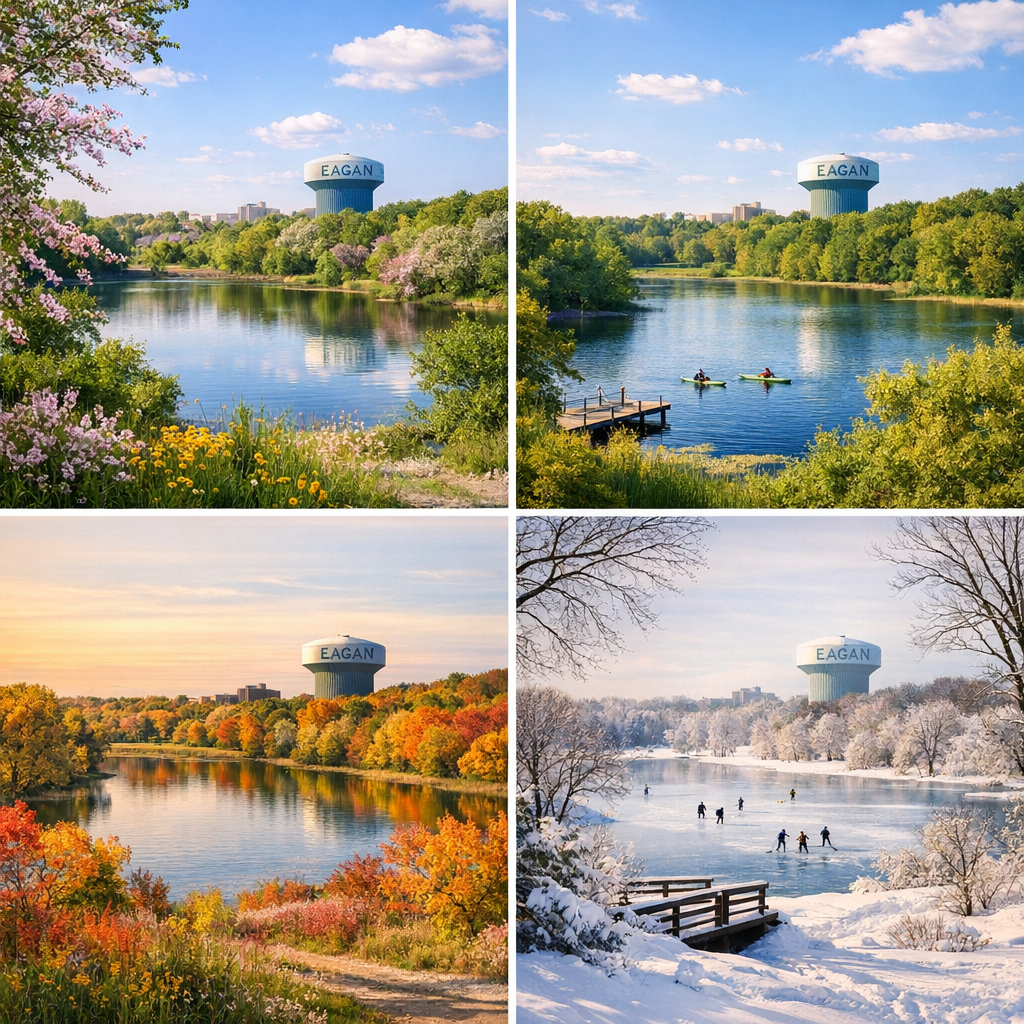
Eagan, Minnesota, experiences a humid continental climate characterized by distinct seasonal variations. Understanding these patterns can help residents and visitors prepare for the year’s weather.
Spring: A Season of Renewal
Spring in Eagan brings a gradual warming trend. Average high temperatures rise from 39.4°F (4.1°C) in March to 66.2°F (19°C) by May. Rainfall increases during this period, with May receiving approximately 2.64 inches (67mm) of precipitation. The lengthening daylight hours, from 12 hours in March to 14.9 hours in May, provide ample time for outdoor activities.
Summer: Warm and Wet
Summers are warm and wet, with average high temperatures peaking at 80.4°F (26.9°C) in July. June typically sees the highest rainfall, averaging 3.78 inches (96mm), contributing to lush greenery. Daylight extends up to 15.5 hours in June, offering long days for recreation.
Autumn: Cooling Down
Autumn brings cooler temperatures, with highs decreasing from 71.2°F (21.8°C) in September to 40.1°F (4.5°C) in November. Rainfall diminishes during this season, and daylight hours shorten, signaling the approach of winter.
Winter: Cold and Snowy
Winters are cold and snowy, with average high temperatures around 20.5°F (-6.4°C) in January. Snowfall is common, with January averaging 4.41 inches (112mm). Daylight is limited, with only 9.3 hours in January, making for shorter days.
Environmental Considerations
Eagan’s climate influences local environmental initiatives. The city has undertaken efforts to improve water quality in its lakes, leading to the removal of LeMay and Fitz lakes from Minnesota’s impaired waters list in 2022. These successes highlight the community’s commitment to sustainability and environmental stewardship.
Understanding Eagan’s climate patterns is essential for residents and visitors to make the most of each season while supporting local environmental efforts.